ShakeOut 2026

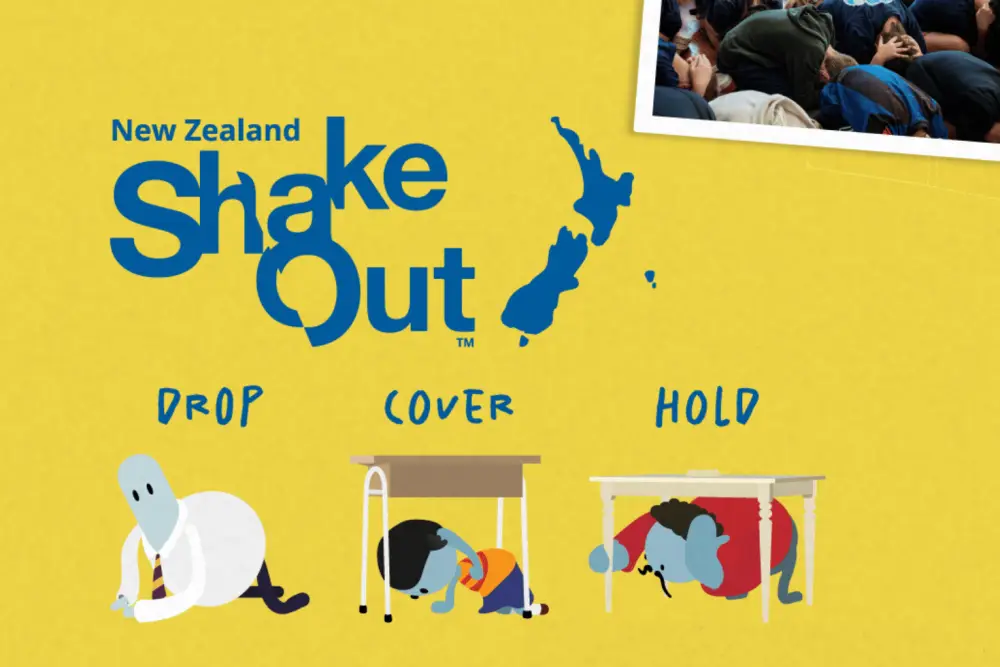
On Wednesday 21 October at 1.30pm, New Zealand's national earthquake drill and tsunami hīkoi (evacuation walk), ShakeOut 2026, will take place.
Thousands of people across Aotearoa will be practising how to stay safe during an earthquake at the same time.
All NMIT ākonga and kaimahi are warmly encouraged to take part where possible: ShakeOut is a self-run drill, meaning individuals, teams, offices, workshops and classrooms can participate from wherever they are.
How to take part
ShakeOut is a self-run drill and there will be no national notification sent out. You can start your drill in whatever way works best for your area. For example, you could:
- Set an alarm on your phone
- Use a bell, whistle, or other alarm
- Call out "EARTHQUAKE DRILL".
At 1:30pm, practise the recommended earthquake response: Drop, Cover, Hold for 30-60 seconds.
DROP: Drop down on your hands and knees. This protects you from being knocked over and allows you to move if necessary.
COVER: Cover your head and neck under a sturdy desk or table if one is nearby. If no shelter is available, use your arms and hands to protect your head and neck.
HOLD: Hold on to your shelter or position until the shaking stops. If your shelter moves, move with it.
If you're in a class
Your kaiako (tutor) will let you know beforehand if you will be participating in the ShakeOut drill and encourage you to join in if you feel comfortable to do so.
Think about what you would do in a real event
While you're completing the drill, take a moment to think about what might happen around you during a real earthquake and what you can do now to be better prepared.
Consider:
- Where is the safest place for you to take cover?
- Are there any hazards nearby that could fall, move, or break during strong shaking?
- What would you need to do immediately after the earthquake?
- Do you have an emergency plan at home?
The tsunami hīkoi
If you are based in, live in, or regularly spend time in a tsunami evacuation zone, consider including a tsunami hīkoi (evacuation walk) as part of your ShakeOut participation.
Once the earthquake drill has finished, identify the nearest high ground or area outside the tsunami evacuation zone and walk the route you would take in a real emergency.
Remember:
'Long or Strong, Get Gone'
If an earthquake is long (lasting longer than a minute) or strong (making it difficult to stand), move immediately to higher ground or inland. Do not wait for an official warning.
After the drill
In class: Take a few minutes to discuss the exercise with your tutor and classmates:
- What worked well?
- Were there any challenges?
- Are there improvements that could be made to your area's emergency preparedness?
- Do any emergency plans need to be reviewed or updated?
At home: When you can, make time to discuss emergency preparedness with your household and develop a household emergency plan.
More information, questions and support
For more information: about emergency preparedness, visit getready.govt.nz(external link).
If you have any questions: please don't hesitate to contact the Health & Safety Team -healthandsafety@nmit.ac.nz.